As an avid BBQ enthusiast, you understand that the thrill of outdoor cooking comes with its own set of challenges, particularly when dealing with intense heat, sizzling grates, and live flames. Protecting your hands is not merely a convenience but a critical safety measure that ensures your grilling sessions remain enjoyable and burn-free. While traditional oven mitts serve well in the kitchen, many pitmasters wonder if industrial welding gloves offer superior protection for the demands of the barbecue pit. This article delves into a comprehensive comparison to help you choose the ultimate hand protection for your grilling adventures.
The Unsung Heroes of the Grill: Why Hand Protection Matters
Grilling involves temperatures that can easily cause severe burns, with hot grates reaching hundreds of degrees Fahrenheit and coals glowing even hotter. Sparks, grease flare-ups, and the sheer heat radiating from a smoker or grill pose constant threats to unprotected hands and forearms. Beyond preventing immediate injuries, proper gloves provide confidence and control, allowing you to manipulate hot items, adjust vents, or move heavy cast iron cookware with precision. This confidence ultimately enhances your grilling technique and the quality of your culinary creations.
Understanding Oven Mitts: The Kitchen Staple
Oven mitts are a household essential, traditionally designed for handling hot bakeware from a conventional oven. For BBQ, the term “oven mitts” often extends to a broader category of heat-resistant gloves specifically marketed for grilling. These come in various materials, each offering distinct advantages and limitations in a high-heat outdoor environment.
Common Materials & Their Suitability for BBQ
- Fabric (Cotton/Aramid Blends): Many BBQ gloves utilize high-performance fabrics like aramid fibers (Kevlar or Nomex) woven with cotton. These offer excellent heat resistance, often rated for temperatures up to 800°F (427°C) or even higher for short durations. They provide good dexterity and breathability, crucial for comfort during longer cooking sessions. However, standard cotton mitts have much lower heat resistance and can quickly absorb liquids, becoming ineffective and potentially hazardous if wet.
- Silicone: Silicone gloves are popular for their waterproof properties and excellent non-slip grip, making them ideal for handling greasy meats or hot, slick surfaces. They are easy to clean, often dishwasher-safe, and highly resistant to stains. While many silicone gloves offer substantial heat protection, their temperature limits can vary, and some users find them bulky, which may reduce dexterity for intricate tasks.
- Neoprene: Often seen in heavy-duty BBQ gloves, neoprene offers a fantastic balance of heat resistance and liquid protection. These gloves are designed to withstand high temperatures while also being waterproof and oil-resistant, making them perfect for handling hot, juicy meats like pulled pork or brisket without worrying about scalding liquids. They generally provide good flexibility and a secure grip.
- Specialized Leather (BBQ Specific): Some premium BBQ gloves are crafted from treated leather, offering a blend of durability, heat resistance, and a more rugged feel. These can withstand significant heat and provide a good barrier against sparks and embers. With proper care, they can last for many grilling seasons, developing a comfortable fit over time.
|
Our Picks for the Best Oven mitts in 2026
As an Amazon Associate I earn from qualifying purchases.
|
||
| Num | Product | Action |
|---|---|---|
| 1 | KitchenAid Beacon Two-Tone Non-Slip Mini Oven Mitt Set, Milkshake/Beige, 5.5"x8", 2 Piece |

|
| 2 | Hovico Silicone Oven Mitts, Heat Resistant 500F Kitchen Mitts 2PCS, 11.6" BPA-Free Soft Baking Gloves, Non-Slip Grip Oven Gloves with Soft Cotton Lining for Kitchen Cooking Baking BBQ - Black |
|
| 3 | KitchenAid Gingham Oven Mitt 2-Pack Set, Milkshake, 7"x13" |
|
| 4 | BPA-Free Silicone Oven Mitts Ultra Heat Resistant up to 500°F - Oven Mitts with Thick Cotton Liner - Long Slip Resistant Pot Holders, Flexible Oven Gloves - Black 13.7" |
|
| 5 | Silicone Oven Mitts (2 PCS), Waterproof Non Slip Grip Oven Gloves with Thick Soft Cotton Lining, Universal Fit Heat Resistant Kitchen Gloves for Baking, BBQ, Cooking and Grilling - White |
|
| 6 | KEGOUU Oven Mitts and Pot Holders 6pcs Set, Kitchen Oven Glove High Heat Resistant 500 Degree Extra Long Oven Mitts and Potholder with Non-Slip Silicone Surface for Cooking (Grey) |
|
| 7 | Heat Resistant Gloves for Cooking Thickened Silicone Coating Cotton Liner Waterproof Food Grade Graffiti-Art Printing Medium |
|
| 8 | KITCHENAID Ribbed Soft Silicone Oven Mitt 2-Pack Set, 7.5"x13", Milkshake |
|
| 9 | Oven Mitts and Pan Racks 4-Piece Set, Extended Kitchen Oven Mitts and Pan Racks, Heat Resistant 500 °F, Silicone Non-Slip Surface for Baking and Cooking (Black) |
|
| 10 | GORILLA GRIP BPA-Free Soft Silicone Oven Mitts, 550F Heat Resistant Waterproof Cooking Safety Gloves, Thick Cotton Lining, Flexible Gripping for BBQ Grilling, Kitchen Potholders Set, 12.5x8.3, Black |
|
Pros of Oven Mitts (for BBQ)
Dedicated BBQ gloves, including many advanced oven mitt designs, often prioritize dexterity, allowing for better manipulation of grilling tools and food. Silicone and neoprene options excel in hygiene due to their easy-to-clean, waterproof surfaces, which prevent cross-contamination when handling raw and cooked foods. Many are also designed with extended cuffs to protect the forearms, an essential feature for reaching deep into a hot grill or smoker.
Cons of Oven Mitts (for BBQ)
The primary drawback of standard oven mitts is their limited heat resistance for extreme BBQ tasks like direct contact with coals or very hot cast iron. Fabric mitts, unless specially treated with aramid fibers, can quickly become too hot to handle and are vulnerable to absorbing hot liquids, which compromises their protective qualities. Some silicone gloves, while effective, might feel overly bulky, hindering fine motor skills.
Unconventional Allies: Welding Gloves in the BBQ Pit
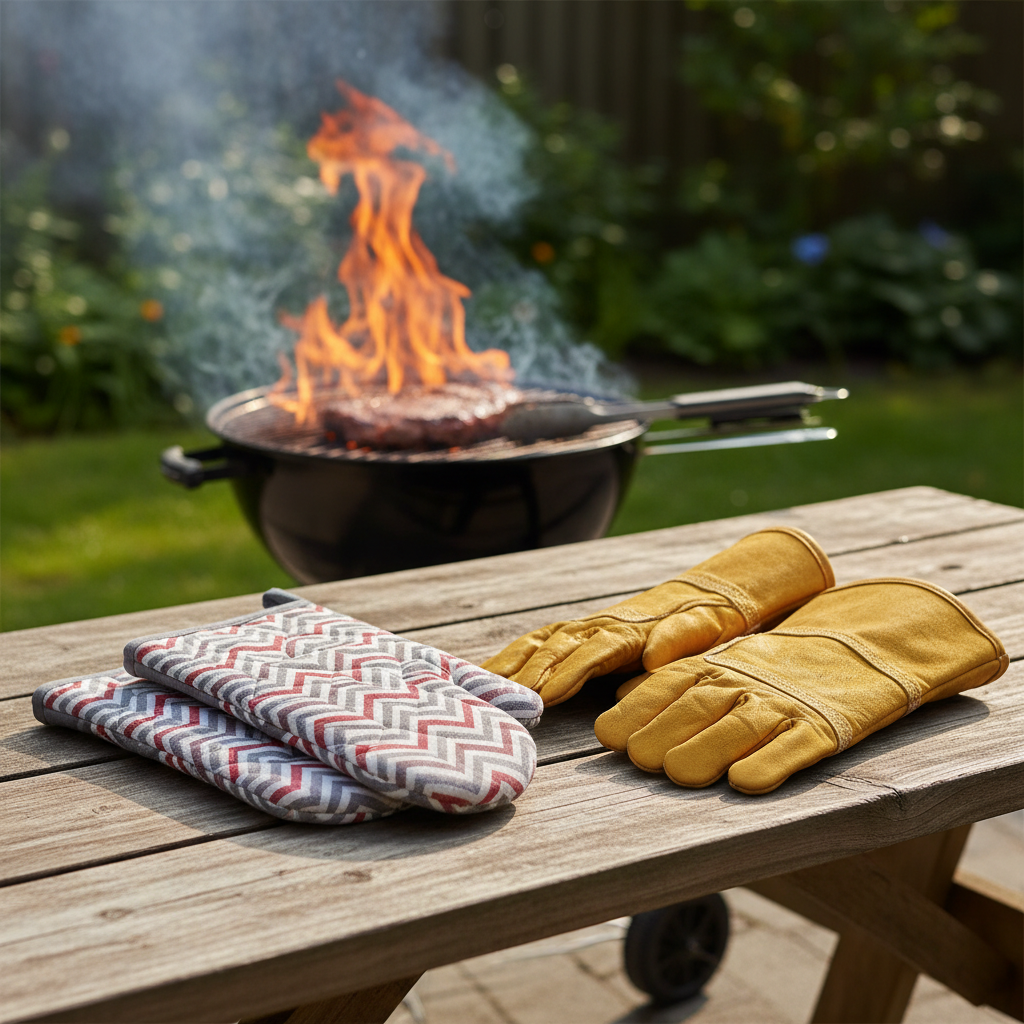
Welding gloves are industrial-grade protective gear, fundamentally designed to shield hands from the extreme heat, sparks, and molten metal encountered in welding. Their robust construction and high-temperature ratings have led many pitmasters to adopt them for heavy-duty BBQ tasks.
Key Characteristics
- Materials: Welding gloves are predominantly made from heavy-duty leather, such as cowhide, goatskin, or pigskin, often featuring multiple layers. The outer leather provides flame and abrasion resistance, while inner linings, typically cotton or aramid (Kevlar), offer insulation.
- Construction: These gloves are built for resilience. They are thick, often featuring reinforced stitching and extra padding in high-wear areas like the palms and fingers. A key feature is their extended cuff, which provides crucial forearm and wrist protection from radiant heat, sparks, and accidental contact with hot surfaces.
- Heat Resistance: This is where welding gloves truly shine. They are engineered to withstand significantly higher temperatures than most conventional oven mitts, often rated for continuous contact with temperatures exceeding 932°F (500°C). This makes them ideal for tasks involving direct flame, hot coals, or extremely hot metal components.
Pros of Welding Gloves (for BBQ)
Welding gloves offer unparalleled heat protection, allowing you to confidently handle glowing charcoal, reposition scorching grill grates, or move heavy, red-hot cast iron Dutch ovens. Their robust leather construction ensures exceptional durability against cuts, scrapes, and abrasions, making them a long-lasting investment for demanding tasks. The extended cuffs provide superior forearm protection, safeguarding against accidental burns when reaching into a deep grill or smoker. Furthermore, for the level of protection they offer, many welding gloves are surprisingly affordable, providing excellent value.
Cons of Welding Gloves (for BBQ)
The heavy-duty nature of welding gloves comes with a trade-off in dexterity. Their bulkiness can make intricate tasks, such as handling small utensils or flipping delicate foods, challenging. Leather, while durable, can become stiff and less flexible over time, particularly after exposure to moisture or intense heat, potentially reducing comfort and grip. A significant concern is hygiene: welding gloves are not typically designed for food contact. The leather may be chemically treated, and they can accumulate soot, grease, or other contaminants from their industrial or grilling use, posing cross-contamination risks if used directly for food preparation. It’s crucial to reserve them for handling equipment, not food.
Head-to-Head: A Detailed Comparison
Choosing between oven mitts (or specialized BBQ gloves) and welding gloves ultimately depends on your specific grilling needs. Here’s a detailed comparison to help clarify their differences:
| Feature | Oven Mitts (BBQ-Specific) | Welding Gloves |
|---|---|---|
| Primary Material | Silicone, Aramid fiber, Neoprene, specialized leather | Heavy-duty leather (cowhide, split leather) |
| Heat Resistance | Good to very high (up to 1472°F for some aramid/silicone) | Extreme (often 932°F+), designed for direct flame/metal |
| Dexterity | Generally better, especially finger-style | Lower, bulkier, less fine motor control |
| Durability | Good (material dependent) | Excellent, built for rugged, abrasive use |
| Forearm Protection | Varies, many BBQ gloves have extended cuffs | Excellent, typically very long cuffs |
| Water/Grease Resist | Good (silicone, neoprene), poor (fabric) | Poor (leather can absorb and stiffen), not waterproof |
| Cleaning/Hygiene | Easy for silicone/neoprene; harder for fabric/leather | Can be challenging, generally not food-grade |
| Cost | Moderate to high | Often surprisingly affordable for the protection |
| Typical Use | Flipping food, handling hot dishes, general grilling | Moving coals, adjusting grates, heavy cast iron, extreme heat, fire management |
Choosing Your Champion: A Buyer’s Guide for BBQ Enthusiasts
The “best” glove isn’t universal; it’s the one that perfectly matches your grilling style and safety requirements.
- Assess Your BBQ Style: Are you a casual weekend griller flipping burgers, or a serious pitmaster managing a live fire and heavy smokers for hours? If your tasks frequently involve direct contact with coals or extremely hot grates, welding gloves’ superior heat resistance is invaluable. For general handling of food and medium-heat items, high-quality BBQ oven mitts might offer better dexterity.
- Prioritize Heat Resistance: Consider the maximum temperatures you routinely encounter. If you’re frequently adjusting burning logs in a fire pit or handling cast iron over roaring flames, look for gloves rated for extreme heat, which often points towards welding gloves or specialized aramid-lined BBQ gloves.
- Consider Dexterity Needs: For delicate tasks like turning skewers or basting, gloves with individual fingers and a snugger fit are preferable. Many silicone or aramid fiber BBQ gloves provide this balance. If you’re mostly moving heavy, hot objects, the bulk of welding gloves might be acceptable for the added protection.
- Evaluate Durability & Longevity: How often will you use your gloves? Welding gloves are built to last under harsh conditions, offering exceptional long-term durability. High-quality specialized BBQ gloves can also be very durable, but their lifespan may vary with material and usage.
- Don’t Forget Forearm Protection: Long cuffs are non-negotiable for serious grilling. Both welding gloves and many dedicated BBQ gloves feature extended lengths to protect your wrists and forearms from radiant heat and splashes.
- Ease of Cleaning & Food Safety: If you often handle food directly with your gloves, opt for silicone or neoprene BBQ gloves that are easy to wash and sanitize. Welding gloves are generally not food-grade and should be reserved for handling equipment only.
- Budget: While some high-end BBQ gloves can be expensive, quality welding gloves often provide comparable or superior heat protection at a very competitive price point.
Top Picks for Every Pitmaster
For those who regularly engage in high-heat tasks such as moving hot coals, adjusting heavy grill grates, or handling cast iron directly over flames, heavy-duty leather welding gloves are an outstanding choice. Their robust construction and extreme heat resistance offer unparalleled protection.
If your grilling involves more delicate food handling, frequent basting, or general oven use, specialized BBQ gloves made from aramid fibers with silicone grips or durable neoprene are excellent versatile options. These typically provide better dexterity and are easier to clean, ensuring food safety. Some pitmasters opt for a hybrid approach: welding gloves for the “dirty work” of fire management and a separate pair of high-dexterity BBQ gloves for handling and serving food.
Care and Maintenance: Maximizing Your Glove’s Lifespan
Proper care significantly extends the life of your heat-resistant gloves.
- Leather Gloves (Welding & BBQ): Avoid saturating leather with water. For cleaning, wipe off soot and grease with a damp cloth and mild soap, then allow them to air dry completely away from direct heat. Conditioning the leather occasionally can prevent stiffness and cracking. Store in a dry, well-ventilated area.
- Silicone & Neoprene Gloves: These are typically the easiest to clean. Simply wash them with soap and water, or place them in the dishwasher. Ensure they are thoroughly dry before storing to prevent mildew.
- Fabric/Aramid Gloves: Check manufacturer instructions; many aramid blend gloves are machine washable. Tumble dry on low heat or air dry. Avoid using bleach or harsh detergents which can degrade the fibers.
Regardless of the type, inspect your gloves regularly for signs of wear, tears, or heat damage. Compromised gloves should be replaced immediately to ensure your safety.
Conclusion
The debate between oven mitts and welding gloves for BBQ isn’t about one being universally superior, but rather about matching the right tool to the task. Welding gloves offer extreme heat protection and rugged durability, making them ideal for the most demanding aspects of fire management and heavy equipment handling in the BBQ pit. Conversely, specialized BBQ oven mitts, particularly those made from silicone, neoprene, or aramid fibers, excel in dexterity, hygiene, and versatility for general grilling and food preparation. Many seasoned grillers find the optimal solution lies in having both: leveraging the brute strength of welding gloves for intense heat and the precision of dedicated BBQ gloves for culinary finesse. Prioritizing safety and understanding the strengths of each type of hand protection will empower you to master the flames with confidence and enjoy every moment of your BBQ journey.
What type of hand protection best suits your unique grilling rituals?
Frequently Asked Questions
Are all welding gloves suitable for BBQ?
No, not all welding gloves are suitable. Look for heavy-duty leather welding gloves, typically designed for stick or MIG welding, which offer high heat and flame resistance. Thin TIG welding gloves, while offering high dexterity, generally do not provide enough thermal protection for intense BBQ tasks like handling hot coals.
Are welding gloves food safe?
Generally, no. Welding gloves are industrial protective gear and are not manufactured to food-grade standards. They may contain chemicals or accumulate residue from welding or grilling activities (soot, grease). It’s best to avoid direct contact with food and use separate, food-safe BBQ gloves or tongs for handling food.
What temperature can typical oven mitts withstand?
The heat resistance of oven mitts varies significantly by material. Standard cotton oven mitts might only protect up to 200-300°F (93-149°C) for brief periods. High-performance BBQ gloves made from aramid fibers or silicone can often withstand temperatures ranging from 450°F (232°C) up to 1472°F (800°C) for certain durations, making them suitable for many grilling tasks.
How do I clean leather BBQ or welding gloves?
To clean leather gloves, avoid submerging them in water, as this can cause the leather to stiffen and crack. Instead, wipe off any dirt, soot, or grease with a damp cloth and mild soap. Allow the gloves to air dry completely at room temperature, away from direct sunlight or heat. Applying a leather conditioner can help maintain their flexibility and prolong their lifespan.
What’s the ideal length for BBQ gloves?
The ideal length for BBQ gloves is one that extends past your wrists and up your forearms, typically 12 to 17 inches. This extended length provides crucial protection against radiant heat, sparks, and accidental splashes of hot liquids or grease, especially when reaching into deep grills, smokers, or ovens.