Have you ever fumbled a hot baking sheet, narrowly avoiding a nasty burn, or struggled to get a secure grip on a heavy pot because your oven mitts felt like clumsy oversized gloves? If so, you understand that the right fit for your kitchen gear is just as crucial as the right ingredients for your recipe. In the bustling heart of your home, where hot ovens and sizzling pans are everyday companions, properly sized oven mitts are not just a convenience; they are a fundamental layer of defense against painful kitchen accidents.
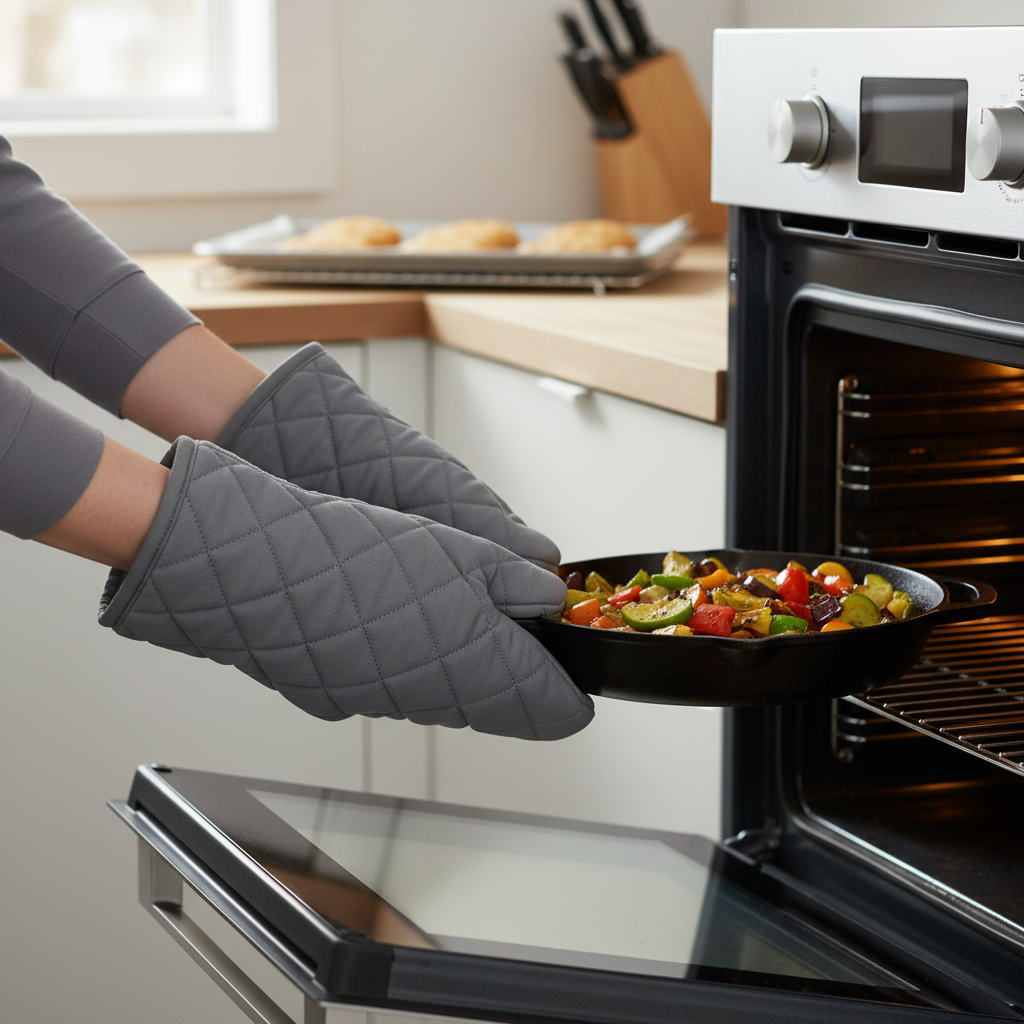
This guide will delve into why the size and fit of your oven mitts are paramount for safety, how to measure your hand to find that perfect match, and other vital features to consider, ensuring you stay protected and confident when handling scorching hot cookware.
Oven Mitts: Your Kitchen’s Essential Safety Partner
Oven mitts are more than just a kitchen accessory; they are your trusty guardians against the intense heat of ovens, stovetops, and grills. These insulated gloves, crafted from materials designed to resist high temperatures, protect your hands and forearms from burns, steam, and accidental spills. They enable you to confidently transfer hot dishes, maneuver baking trays, and handle cast iron skillets straight from the heat source. Without them, even the most seasoned cook risks severe injury, making a reliable pair an indispensable tool for every culinary adventure.
Why Oven Mitt Size Truly Matters for Kitchen Safety
The fit of your oven mitts is directly linked to your safety and efficiency in the kitchen. An ill-fitting mitt can transform a simple task into a dangerous ordeal, underscoring why size is not just a comfort factor but a critical safety consideration.
The Dangers of Ill-Fitting Mitts:
- Too Loose: If your oven mitts are too large, they can easily slip off your hand, leaving your skin vulnerable to extreme heat. Overly baggy mitts also create excess fabric that can catch on oven racks or cookware handles, leading to fumbling, loss of grip, and potentially dropping a hot dish. Imagine trying to steady a heavy roasting pan with mitts that are sliding around – it’s an accident waiting to happen.
- Too Tight: Conversely, oven mitts that are too snug will restrict your hand movement and dexterity. This limitation can make gripping difficult, reduce your sense of touch, and expose parts of your wrist or forearm to heat if the mitt doesn’t extend far enough. A tight fit can also be uncomfortable, causing you to rush or even pull your hand out of the mitt prematurely.
The “sweet spot” for oven mitt fit is snug enough to stay securely on your hand but with enough room for your fingers to wiggle and move freely. This balance ensures maximum control and confidence, allowing you to handle hot items with precision and without fear.
Understanding Oven Mitt Sizing: It’s Not One-Size-Fits-All
While many oven mitts are marketed as “one size fits all,” the reality is that hand sizes vary considerably, and so should your protective gear. Ignoring these differences can compromise your safety. Manufacturers often provide sizing, even if subtly, ranging from small to extra-large, to accommodate a wider array of users. Recognizing that oven mitts are not uniform in dimensions is the first step toward finding a pair that genuinely fits and protects you.
Common sizing typically breaks down as follows:
- Small/Adult S: Ideal for those with petite hands or younger cooks.
- Medium/Large (often labeled ‘One Size’): Designed to fit most average adult hands.
- Extra Large: Best for individuals with larger hands or those who prefer more generous coverage.
If you find yourself between sizes or have broader palms, it’s always wise to choose the larger size. A slightly roomier fit is generally safer than one that’s too tight and restrictive.
How to Measure Your Hand for the Perfect Oven Mitt Fit
Finding the right size starts with knowing your hand measurements. This simple process takes only a few seconds and can significantly enhance your kitchen safety.
Here’s how to measure your hand accurately:
- Palm Circumference: Open your hand slightly. Using a flexible tape measure, wrap it around the widest part of your palm, just below your knuckles, excluding your thumb. Note this measurement.
- Hand Length: Measure from the tip of your middle finger down to the base of your palm, where your wrist begins.
Compare these measurements to any sizing charts provided by oven mitt manufacturers. While not all brands offer detailed charts, understanding your own hand dimensions will guide you toward the general size category that suits you best.
“A well-fitting oven mitt should feel like an extension of your hand, not a hindrance. If you’re fumbling, it’s not the right fit.” – Chef Julianne Rossi, Culinary Instructor
Key Factors Beyond Size: Ensuring Comprehensive Protection
While size and fit are paramount, other features contribute significantly to the overall safety and effectiveness of your oven mitts. Considering these aspects will help you choose a pair that offers comprehensive protection.
- Mitts Length: The length of your oven mitts is crucial for protecting your forearms from accidental burns. Traditional mitts typically average around 14 inches, covering your wrist. However, lengths can range from 11 to 24 inches. Longer mitts are particularly beneficial when reaching deep into a hot oven or tending to a grill, preventing painful contact with hot surfaces or racks.
- Purlicue Depth and Grip: The “purlicue” refers to the webbed space between your thumb and forefinger. Adequate depth in this area is vital for a secure and comfortable grip. If this part of the mitt is too shallow, it can impede your ability to grasp items firmly, leading to slippage. Look for mitts that allow your thumb and forefinger to seat fully and naturally.
- Heat Resistance: Always check the temperature rating of oven mitts. High-quality mitts are designed to withstand extreme heat, often rated up to 400°F (200°C) or even 500°F (260°C) or higher. Materials like silicone, aramid fibers (used in Kevlar), and densely woven cotton with thermal lining offer superior thermal insulation.
- Grip Enhancement: A secure grip is non-negotiable for safety. Many effective oven mitts feature silicone dots, textured patterns, or specialized rubberized surfaces on the palms and fingers. These enhancements prevent hot, slippery dishes or heavy pans from sliding out of your grasp, ensuring stable handling.
- Dexterity and Flexibility: Even with excellent heat resistance, a stiff or bulky mitt can hinder your ability to perform delicate kitchen tasks. Look for mitts that offer good flexibility, allowing your fingers and hand to move naturally. This dexterity is especially important for intricate maneuvers, such as adjusting oven racks or handling smaller baking dishes.
- Material and Comfort: Beyond heat resistance, the material impacts comfort and breathability. Silicone mitts are highly durable and often waterproof, making them easy to clean. Cotton mitts, particularly those with multiple layers, offer good heat protection and breathability. Some mitts feature soft inner linings for added comfort during prolonged use.
Types of Oven Mitts
Understanding the different types of oven mitts can also influence your choice, especially concerning their impact on fit and dexterity.
- Traditional Mitts: These are the classic “mitten” style, offering broad protection but sometimes sacrificing individual finger dexterity. Their fit is often more generous, making sizing for overall hand coverage and length crucial.
- Five-Finger Gloves: Designed more like traditional gloves, these offer superior dexterity, allowing you to grip and manipulate objects with individual fingers. They are often available in more precise sizing (S, M, L, XL) to ensure each finger compartment fits well.
- Hybrid Designs: Some mitts combine features, such as a traditional mitt shape with a more defined thumb area or enhanced silicone grip patterns, aiming to balance protection and control.
Top Tips for Using and Maintaining Your Oven Mitts Safely
Even the best-fitting oven mitts require proper care and usage to maintain their safety and extend their lifespan.
- Inspect Regularly: Before each use, quickly check your mitts for any tears, holes, or signs of wear and tear. Damaged mitts compromise heat protection.
- Keep Them Dry: Never use wet or damp oven mitts. Moisture conducts heat, significantly reducing their effectiveness and increasing the risk of burns.
- Clean Appropriately: Follow the manufacturer’s cleaning instructions. Many fabric mitts are machine washable, while silicone mitts can be easily wiped clean. Regular cleaning removes grease and food residue that could affect grip or insulation.
- Replace When Worn: Over time, the insulating properties of oven mitts can degrade. If your mitts feel less protective or show significant wear, it’s time to replace them.
Conclusion
Choosing the right size oven mitts for safety is an essential aspect of creating a secure and enjoyable cooking environment. From understanding the dangers of ill-fitting mitts to accurately measuring your hand and considering critical features like length, grip, and heat resistance, making an informed choice empowers you in the kitchen. Investing in a pair that fits well provides crucial protection, enhances your control, and boosts your confidence when handling high temperatures. So, take a moment to evaluate your current mitts or carefully select your next pair.
Are your oven mitts truly protecting you, or are they a hidden hazard?
Frequently Asked Questions
What happens if my oven mitts are too big?
|
Our Picks for the Best Oven mitts in 2026
As an Amazon Associate I earn from qualifying purchases.
|
||
| Num | Product | Action |
|---|---|---|
| 1 | KitchenAid Beacon Two-Tone Non-Slip Mini Oven Mitt Set, Milkshake/Beige, 5.5"x8", 2 Piece |

|
| 2 | KitchenAid Gingham Oven Mitt 2-Pack Set, Milkshake, 7"x13" |
|
| 3 | Hovico Silicone Oven Mitts, Heat Resistant 500F Kitchen Mitts 2PCS, 11.6" BPA-Free Soft Baking Gloves, Non-Slip Grip Oven Gloves with Soft Cotton Lining for Kitchen Cooking Baking BBQ - Black |
|
| 4 | Heat Resistant Gloves for Cooking Thickened Silicone Coating Cotton Liner Waterproof Food Grade Graffiti-Art Printing Medium |
|
| 5 | KITCHENAID Ribbed Soft Silicone Oven Mitt 2-Pack Set, 7.5"x13", Milkshake |
|
| 6 | KEGOUU Oven Mitts and Pot Holders 6pcs Set, Kitchen Oven Glove High Heat Resistant 500 Degree Extra Long Oven Mitts and Potholder with Non-Slip Silicone Surface for Cooking (Grey) |
|
| 7 | BPA-Free Silicone Oven Mitts Ultra Heat Resistant up to 500°F - Oven Mitts with Thick Cotton Liner - Long Slip Resistant Pot Holders, Flexible Oven Gloves - Black 13.7" |
|
| 8 | Silicone Oven Mitts (2 PCS), Waterproof Non Slip Grip Oven Gloves with Thick Soft Cotton Lining, Universal Fit Heat Resistant Kitchen Gloves for Baking, BBQ, Cooking and Grilling - White |
|
| 9 | GORILLA GRIP BPA-Free Soft Silicone Oven Mitts, 550F Heat Resistant Waterproof Cooking Safety Gloves, Thick Cotton Lining, Flexible Gripping for BBQ Grilling, Kitchen Potholders Set, 12.5x8.3, Black |
|
| 10 | Oven Mitts and Pan Racks 4-Piece Set, Extended Kitchen Oven Mitts and Pan Racks, Heat Resistant 500 °F, Silicone Non-Slip Surface for Baking and Cooking (Black) |
|
Oven mitts that are too big can easily slip off your hand, leaving you vulnerable to burns. They also create excess fabric, hindering your grip and increasing the risk of fumbling or dropping hot dishes. This lack of control can turn a simple task into a dangerous accident.
Can I use pot holders instead of oven mitts?
While pot holders offer some heat protection, they typically do not provide the same level of coverage as oven mitts. Pot holders often lack forearm protection and can be harder to grip securely, especially with larger or heavier items. For reaching into ovens or handling substantial hot cookware, oven mitts are generally a safer and more effective choice.
How often should I replace my oven mitts?
The lifespan of oven mitts varies depending on their material, frequency of use, and quality. You should replace your oven mitts when you notice signs of wear such as thinning, tears, holes, or when they no longer provide adequate heat protection. If you feel heat seeping through them more easily, it’s a clear indicator that their insulating properties have degraded.